
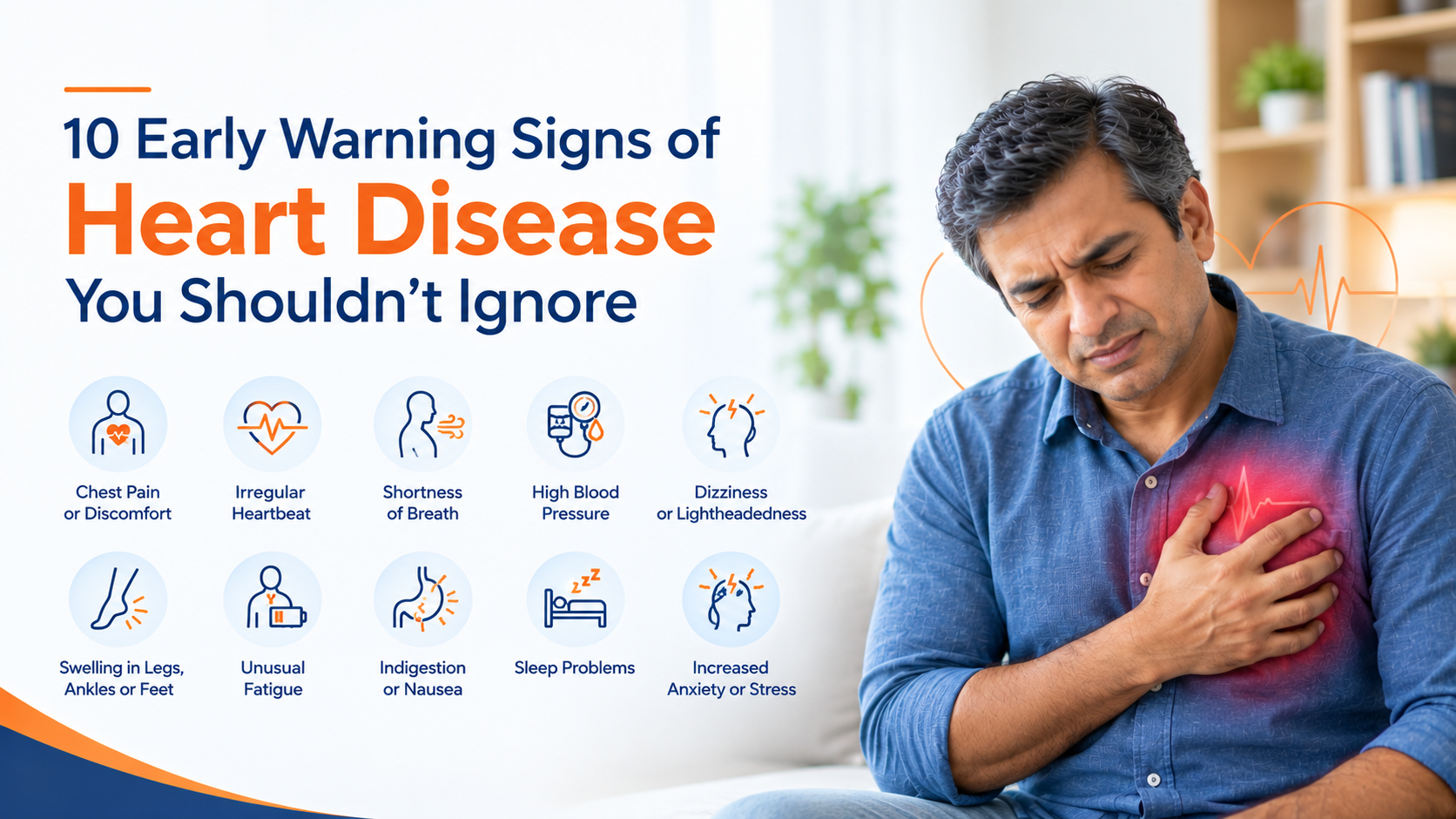
Heart disease often gives signals long before a major event such as a heart attack. The problem is that these signals are easy to dismiss as acidity, stress, age or tiredness. Recognising them early gives you and your cardiologist a chance to act in time.
Here are ten warning signs that deserve attention.
1. Chest discomfort
Chest discomfort is one of the most recognised warning signs of a potential heart problem. It may feel like pressure, squeezing, tightness, heaviness or burning in the centre of the chest. Some people describe it as a feeling that something heavy is pressing against their chest, while others experience discomfort that comes and goes, particularly during physical activity or emotional stress.
This discomfort may occur when the heart muscle does not receive enough oxygen-rich blood, a condition that can be associated with coronary artery disease. Although chest pain can also result from acidity, muscle strain or other non-cardiac conditions, it is important not to assume that the cause is harmless without proper evaluation.
Pay attention if the discomfort repeatedly occurs while walking, climbing stairs or exercising, and improves when you rest. New, severe or persistent chest discomfort, especially when accompanied by breathlessness, sweating, nausea or pain spreading to the arm or jaw, may indicate a heart attack.
Seek emergency medical care immediately if you experience symptoms suggestive of a heart attack. Do not wait for the discomfort to disappear on its own.
2. Breathlessness
Feeling short of breath after intense exercise can be normal. However, becoming breathless during activities that you previously managed comfortably may indicate an underlying heart or lung condition. For example, if climbing a single flight of stairs, walking a short distance or performing routine household tasks leaves you unusually breathless, it deserves medical attention.
The heart pumps oxygen-rich blood throughout the body, while the lungs supply that oxygen. When the heart cannot pump effectively, fluid may accumulate in the lungs, making breathing more difficult. This can occur in people with heart failure or other cardiovascular conditions. Breathlessness may also result from asthma, anaemia and several other health problems, so identifying the cause is essential.
Notice whether your breathing difficulties develop gradually or appear suddenly. Some people find it difficult to breathe comfortably when lying flat and need extra pillows to sleep. Others wake up during the night feeling breathless and have to sit upright to recover.
Sudden or severe breathlessness, particularly when accompanied by chest discomfort, faintness or cold sweating, requires emergency medical care. Persistent or worsening breathlessness should also be evaluated promptly, even if it occurs without chest pain.
3. Pain in the arm, jaw, neck, back or stomach
Heart-related pain does not always begin or remain in the chest. Sometimes, discomfort spreads to other parts of the upper body, including one or both arms, the shoulders, the neck, the jaw, the back or the upper abdomen. This happens because the nerves carrying pain signals from the heart can overlap with pathways that carry sensations from these areas.
The discomfort may feel like pressure, aching, heaviness or tightness rather than sharp pain. For some people, it appears during physical exertion or emotional stress. Others experience it alongside nausea, breathlessness, sweating or unusual fatigue.
Women, older adults and people with diabetes may experience less typical symptoms during a heart attack. For example, they may report upper abdominal discomfort, nausea, back pain or unexplained weakness without prominent chest pain. However, these symptoms can occur in anyone and should not automatically be attributed to indigestion or muscle strain.
Pay particular attention when the pain is new, unexplained, occurs with exertion or is accompanied by other possible cardiac symptoms. If you experience sudden pain or discomfort in these areas along with chest pressure, breathlessness, sweating or nausea, seek emergency medical attention rather than trying to treat it at home.
4. Palpitations
Palpitations are sensations that make you unusually aware of your heartbeat. You may feel that your heart is racing, pounding, fluttering or skipping beats. Some people describe a sudden thumping sensation in the chest, while others notice brief pauses followed by a stronger heartbeat.
Palpitations can occur after consuming caffeine, experiencing stress, exercising or getting insufficient sleep. In some cases, however, they may be associated with an abnormal heart rhythm, thyroid disorders, anaemia or other medical conditions. An irregular heartbeat does not always indicate a serious problem, but recurring or unexplained episodes deserve attention.
Observe when the palpitations occur, how long they last and whether they appear during rest or physical activity. It can also help to note whether they are associated with dizziness, weakness, chest discomfort or breathlessness. A healthcare professional may recommend an electrocardiogram (ECG), a wearable heart monitor or other tests to identify the underlying cause.
Arrange a medical evaluation if palpitations are frequent, persistent or becoming more noticeable. If they occur with chest pain, severe breathlessness, fainting or near-fainting, seek emergency care immediately.
5. Unusual fatigue
Feeling tired after a demanding day or a night of poor sleep is common. However, persistent fatigue that seems disproportionate to your activity level may warrant further investigation, particularly when it develops without an obvious explanation or interferes with everyday activities.
The heart is responsible for delivering oxygen and nutrients to tissues throughout the body. When its pumping function is impaired, you may feel exhausted while walking, climbing stairs, doing household chores or performing tasks that previously required little effort. Fatigue can sometimes accompany conditions such as heart failure or coronary artery disease, even when chest discomfort is absent.
Some people notice that they need more rest than usual, struggle to complete their normal routine or feel unusually weak after minimal exertion. Women may experience unusual fatigue as part of a heart attack, sometimes alongside nausea, breathlessness or back discomfort. Nevertheless, fatigue alone is not specific to heart disease.
Anaemia, thyroid disorders, infections, poor sleep and several other conditions can also cause persistent tiredness. If your energy levels remain low despite adequate rest, or the fatigue is progressively worsening, consult a healthcare professional to determine the cause.
Sudden, overwhelming fatigue accompanied by chest discomfort, cold sweating, breathlessness or nausea should be treated as a possible emergency.
6. Swelling in the legs, ankles or feet
Swelling in the lower limbs, often called oedema, occurs when excess fluid collects in the body’s tissues. You may notice that your ankles look puffy, your shoes feel tighter than usual or your socks leave deeper marks around your legs. Pressing gently on the swollen area may sometimes leave a temporary indentation.
Heart-related swelling can develop when the heart is unable to pump blood effectively, causing fluid to accumulate in the body. It is often noticeable around the ankles and feet and may become more pronounced after standing or sitting for long periods. In some cases, swelling occurs alongside breathlessness, unusual fatigue or a rapid increase in body weight over a short period due to fluid retention.
However, leg swelling is not always caused by a heart problem. Kidney or liver conditions, certain medications, vein disorders and prolonged immobility can also contribute to it. The location, severity and associated symptoms help a healthcare professional determine the likely cause.
Do not ignore swelling that is new, persistent, worsening or accompanied by other symptoms. Seek emergency care if swelling occurs with sudden breathlessness or chest pain. Sudden swelling in just one leg, particularly with pain, warmth or redness, also needs urgent assessment because it may indicate a blood clot.
7. Dizziness or fainting
Occasional light-headedness can occur when you stand up quickly, become dehydrated or have not eaten enough. However, repeated dizziness, unexplained fainting or the sensation that you are about to lose consciousness may sometimes indicate a cardiovascular problem.
The brain needs a continuous supply of oxygen-rich blood to function properly. If blood pressure drops significantly or the heart rhythm becomes abnormal, blood flow to the brain may temporarily decrease. Certain heart valve conditions and other cardiovascular disorders can also cause fainting, particularly during physical activity.
You might experience blurred vision, weakness, a sudden feeling of unsteadiness or a sensation that the surroundings are moving. Some people briefly lose consciousness and recover quickly, while others feel exhausted or confused afterwards. These symptoms should not be dismissed, especially if they occur repeatedly or without an obvious trigger.
If you faint during exercise, experience unexplained fainting while sitting or lying down, or have a family history of sudden cardiac death, prompt medical evaluation is particularly important.
Seek emergency care if dizziness or fainting occurs with chest pain, severe breathlessness, a sustained rapid heartbeat, significant bleeding or new neurological symptoms. Until the cause is understood, avoid driving or activities in which a sudden loss of consciousness could cause injury.
8. Cold sweat with discomfort
Sweating is a normal response to heat, exercise and stress. However, suddenly developing a cold, clammy sweat without an obvious reason can sometimes be a warning sign, particularly when accompanied by chest discomfort, nausea, breathlessness or unusual weakness.
During a heart attack, the body may activate its stress response, producing sweating, pale or clammy skin and a feeling of intense discomfort. Some people also experience light-headedness, anxiety or a sense that something is seriously wrong. These symptoms can develop with or without the classic crushing chest pain often associated with a heart attack.
Cold sweating alone does not confirm a heart problem. Low blood sugar, severe pain, infections and other conditions can also cause it. The important factor is the combination of symptoms, how suddenly they appear and whether they represent a change from your normal condition.
If unexplained cold sweating occurs alongside chest pressure, pain spreading to the arm or jaw, breathlessness or nausea, seek emergency medical attention immediately. Do not wait to see whether resting or drinking water makes the symptoms disappear.
If you have diabetes or known cardiovascular risk factors, be especially cautious about new, unexplained symptoms, as heart-related problems may not always present with prominent chest pain.
9. Persistent cough or wheeze
A persistent cough or wheezing is commonly associated with respiratory conditions such as asthma, allergies and respiratory infections. However, in some cases, it can also be related to a heart problem, particularly when accompanied by breathlessness or swelling in the legs.
When the heart does not pump blood efficiently, pressure can build up in the blood vessels of the lungs. This may cause fluid to accumulate in or around the lungs, leading to coughing, difficulty breathing and sometimes wheezing. Symptoms may become more noticeable when lying flat or during the night.
Some people develop a cough that persists despite usual treatment for a suspected respiratory problem. In more serious cases, fluid in the lungs may produce pink or frothy sputum. This is not a typical cough and requires emergency medical assessment, especially when accompanied by sudden breathlessness.
A cough by itself is much more likely to have several possible explanations than to establish a heart diagnosis. However, a cough that persists alongside declining exercise tolerance, breathlessness when lying down, unexplained fatigue or swelling in the ankles should not be overlooked.
Seek medical advice to determine whether the symptoms are respiratory, cardiac or related to another condition. Sudden severe breathing difficulties or coughing up pink, frothy sputum requires emergency care.
10. Reduced exercise tolerance
Exercise tolerance refers to your ability to perform physical activities without becoming excessively tired, breathless or uncomfortable. If you gradually find it harder to walk your usual distance, climb stairs, carry groceries or complete your normal exercise routine, the change deserves attention.
The heart and lungs work together to deliver oxygen to the muscles during physical activity. When the heart’s pumping function or blood supply is impaired, your muscles may not receive the oxygen they need to sustain the same level of effort. As a result, activities that once felt easy may begin to require frequent breaks.
The change can be subtle. You might start walking more slowly, avoid stairs, stop to catch your breath or feel unusually exhausted after routine tasks. Some people attribute these changes to ageing, weight gain or a sedentary lifestyle, but a gradual decline in stamina should not automatically be considered a normal part of getting older.
Reduced exercise tolerance can also result from anaemia, lung disease, medication effects and other conditions. A healthcare professional can assess your symptoms and medical history and determine whether further investigations are necessary.
If your stamina has noticeably declined without an obvious explanation, arrange a medical evaluation. Stop exercising and seek emergency care if physical activity triggers chest discomfort, fainting, severe breathlessness or other sudden, concerning symptoms.
What to do next
- If symptoms are severe or sudden, go to the nearest emergency department at once.
- If they are mild or intermittent, book a consultation with a cardiologist, and note down when they occur, how long they last, and what triggers them.
- Do not self-medicate with painkillers or antacids repeatedly.
A basic evaluation usually includes a physical examination, ECG, ECHO, and blood tests. At Bharath Cardio & Gynaec Centre, Porur, Dr. K. Thiyagarajan, MD, DM (Cardiology), and team offer these evaluations under one roof.
Frequently Asked Questions
Is chest pain always a heart problem?
No. Chest pain can result from acid reflux, muscle strain, anxiety, or respiratory conditions. However, chest discomfort accompanied by breathlessness, sweating, nausea, or pain spreading to the arm or jaw may indicate a heart problem and requires immediate medical attention.
Are symptoms different in women?
Yes. Women may experience chest pain or pressure, but they can also have symptoms such as unusual fatigue, nausea, breathlessness, dizziness, and pain in the back, neck, or jaw. These symptoms should not be ignored, particularly when they appear suddenly or occur together.
Can a normal ECG rule out heart disease?
No. A normal resting ECG does not rule out every heart condition, including coronary artery disease. Depending on your symptoms and medical history, a doctor may recommend additional tests, such as an echocardiogram (ECHO), a stress test, or other investigations to assess your heart health.
Book an Appointment
Bharath Cardio & Gynaec Centre, Plot No. C1, Anusha Garden Phase I, Mugalivakkam Main Road, Madhanandapuram, Chennai 600125. Call 9025747428. Open Monday to Saturday 5:00 pm to 9:30 pm and Sunday 9:00 am to 12:00 pm.